Constellation Economics: Reduce Satellite Requirements by 50% with SANZAR ADCS
Superior coverage isn’t just a technical achievement, it’s a business advantage. When your ADCS covers more area per pass, you need fewer satellites to achieve your mission goals.
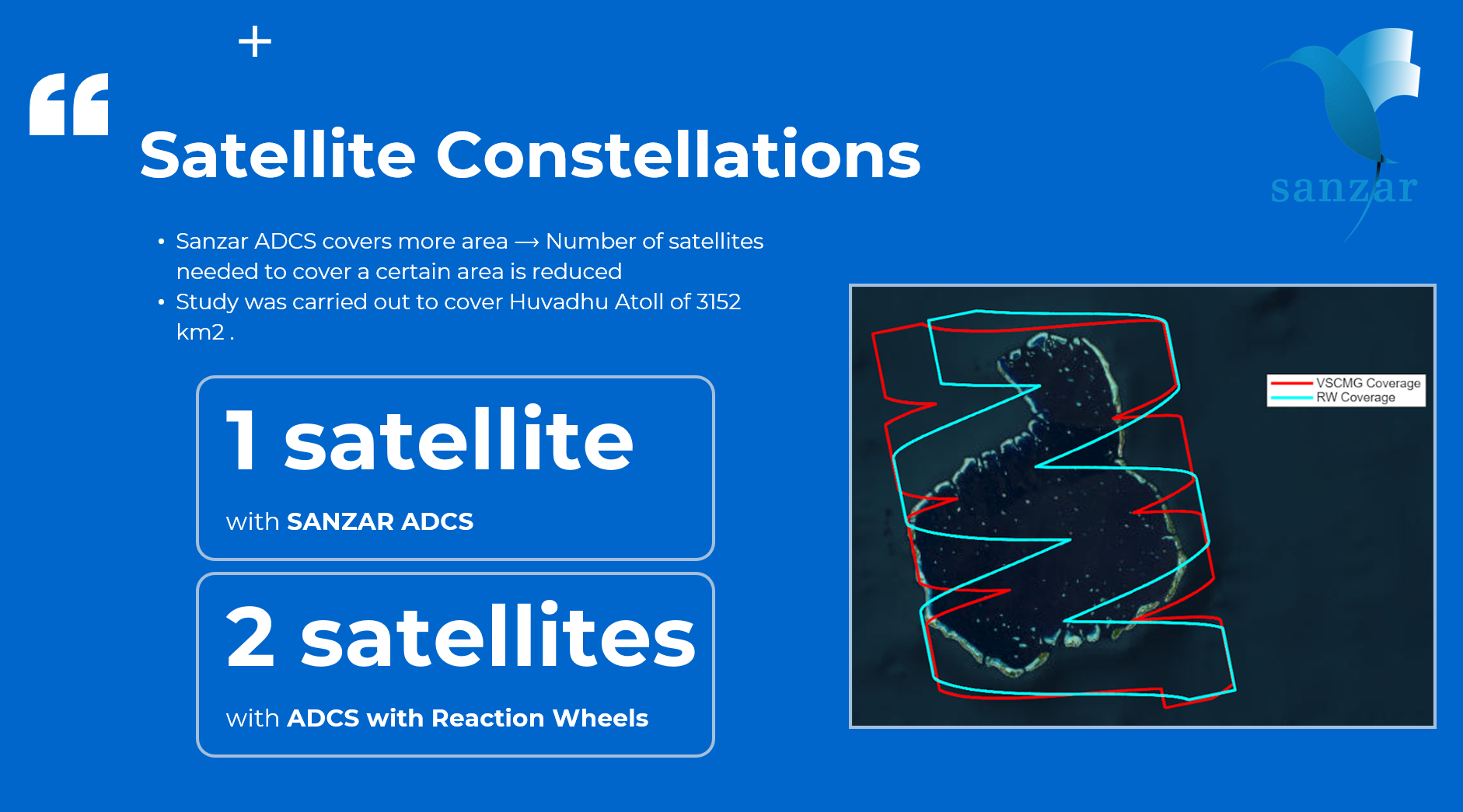
Real-World Case Study: Huvadhu Atoll Coverage
- Target area: 3,152 km²
- SANZAR ADCS: 1 satellite required
- Traditional Reaction Wheels: 2 satellites required
- Result: 50% constellation reduction
What does this mean for your mission economics?
💵 Lower CAPEX – Build and launch half the satellites for the same coverage
⚡ Reduced operational costs – Fewer satellites mean lower ground segment, operations, and maintenance expenses
🚀 Simplified mission design – Less complex constellation management and coordination
📡 Fewer ground stations – Reduced infrastructure requirements
🔧 Lower risk – Fewer assets to manage = reduced operational complexity
⏱️ Faster deployment – Get to full operational capability sooner
For constellation operators, commercial Earth observation providers, and government agencies, this efficiency advantage directly impacts your bottom line and time-to-market.
Better performance. Lower costs. Smarter missions.
#NewSpace #SatelliteConstellation #SpaceEconomics #EarthObservation #Innovation